
Elderflower & Elderberry
(Sambucus nigra)
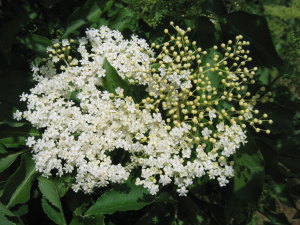
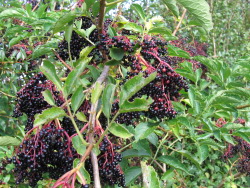
Sambucus grow easily from hardwood cuttings, which is what we used to establish our own Elderberry hedge. They grow very quickly and are best treated as a short-lived small tree, which is periodically cut down to ground level. If not they can collapse under their own weight.
Elderflowers, a natural flavour match for gooseberries, are ready to pick from mid-November here, well before our own Gooseberries mature. There are sometimes still some elderflowers left on the bushes a month later, when the gooseberries are harvested, but using the recipes below means any mis-match in picking times is no longer a problem.
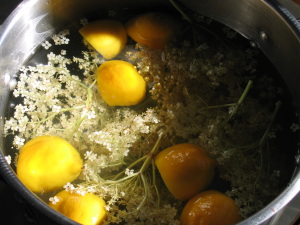
Sparkling Elderflower Fizz

Toss into a clean bucket: 500gr white sugar, 2tb white vinegar, 4.5lt water, 2 quartered lemons, 5 good sized Elderflowers (pick just as the first florets begin to open, being sure to rinse any thrips off before adding to the bucket)
Rest for 24 hrs, stirring occasionally to dissolve the sugar. Strain twice: first with a coarse sieve for the big bits, then again through a cloth to catch the smaller bits. Decant into 4 x 1.5lt plastic soft-drink bottles. Screw tops are essential, as the pressure, through fermentation, will blow out a cork.
Leave at room temperature for a few days first, to develop the 'sparkle', but do keep a careful eye on it as the brew can become quite active. To store, either refrigerate or freeze. Serve straight, with a slice of lemon and a sprig of mint or lemon balm.
Elderflower-Poached Gooseberries
Toss some Gooseberries into a pot and pour Sparkling Elderflower over to cover, adding extra sugar to taste. You may want to top'n'tail them first, but really, this is not essential.
Gently bring the fruit to a simmer, and as soon as the liquid starts to bubble take the pot off the heat and cover with a lid - the fruit "blows" very easily if too much heat is applied. 15 minutes sitting should be enough to render the fruit tender yet still whole.
Try this with Carrot Halva & cream.


